We live in a completely interconnected world, where mobile devices have become an integral part of our daily lives. From communication and entertainment to accessing information, we rely heavily on our smartphones and tablets. Not surprisingly, the realm of e-commerce has also witnessed a significant shift towards mobile platforms. In this blog post, we will explore the growing prominence of mobile e-commerce and how it is reshaping the way we shop online.
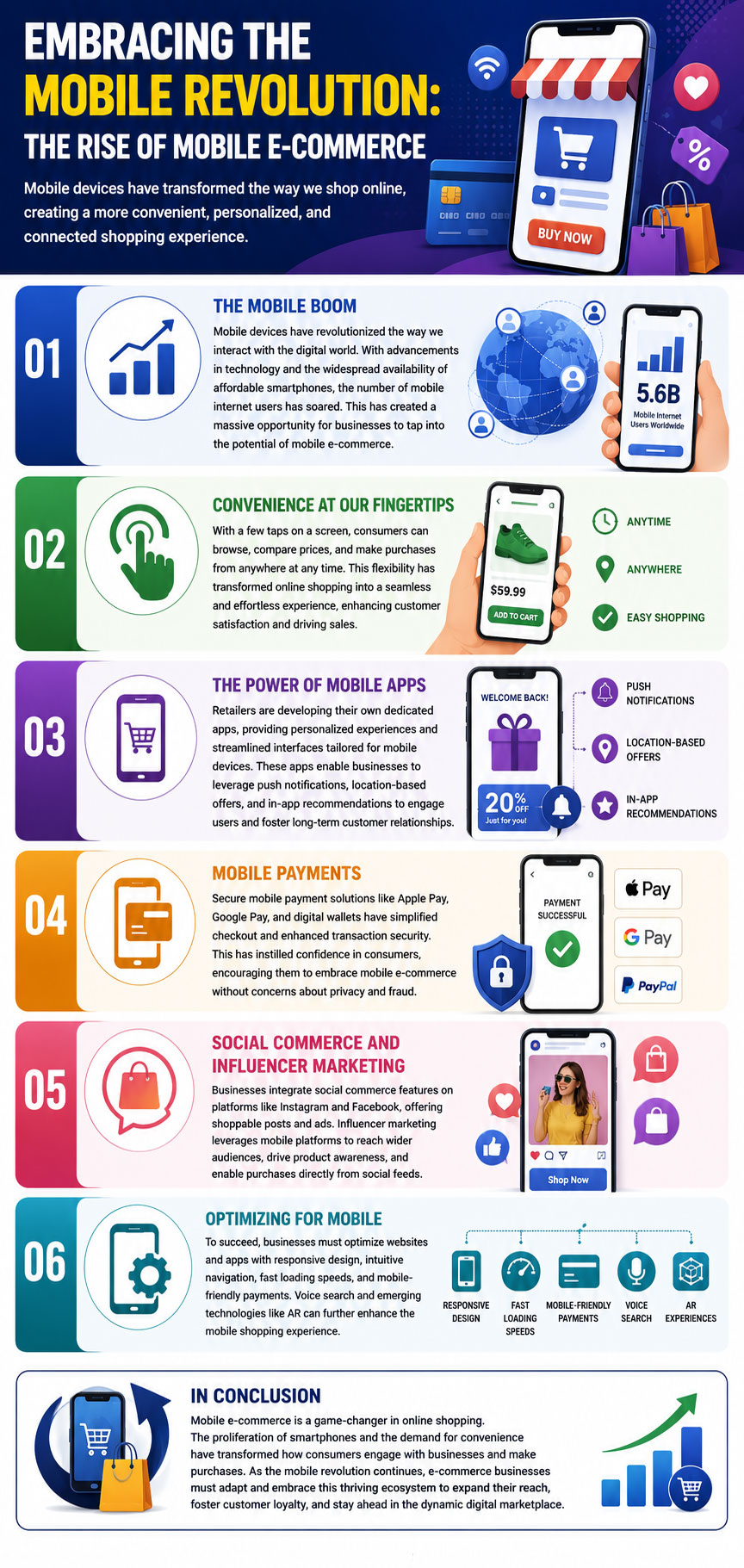
The Mobile Boom
Mobile devices have revolutionized the way we interact with the digital world. With advancements in technology and the widespread availability of affordable smartphones, the number of mobile internet users has soared. This has created a massive opportunity for businesses to tap into the potential of mobile e-commerce.
Convenience at Our Fingertips
One of the main reasons for the rapid growth of mobile e-commerce is the convenience it offers. With a few taps on a screen, consumers can browse, compare prices, and make purchases from anywhere at any time. This flexibility has transformed online shopping into a seamless and effortless experience, enhancing customer satisfaction and driving sales.
The Power of Mobile Apps
Mobile apps have played a crucial role in the success of mobile e-commerce. Retailers are developing their own dedicated apps, providing personalized experiences and streamlined interfaces tailored for mobile devices. These apps enable businesses to leverage push notifications, location-based offers, and in-app recommendations to engage users and foster long-term customer relationships.
Mobile Payments
The evolution of secure mobile payment solutions has also contributed to the growth of mobile e-commerce. Digital wallets, such as Apple Pay and Google Pay, along with other mobile payment platforms, have simplified the checkout process and enhanced the security of transactions. This has instilled confidence in consumers, encouraging them to embrace mobile e-commerce without concerns about privacy and fraud.
Social Commerce and Influencer Marketing
Mobile devices have become indispensable for social media enthusiasts. Recognizing this trend, businesses have integrated social commerce features within their mobile e-commerce strategies. Platforms like Instagram and Facebook offer shoppable posts and ads, allowing users to discover products seamlessly and make purchases directly from their social feeds. Moreover, influencer marketing has gained traction, leveraging mobile platforms to reach wider audiences and drive product awareness.
Optimizing for Mobile
To succeed in the mobile e-commerce landscape, businesses must prioritize optimizing their websites and apps for mobile devices. Responsive design, intuitive navigation, fast loading speeds, and mobile-friendly payment gateways are crucial elements for delivering a frictionless experience. Furthermore, incorporating voice search capabilities and leveraging emerging technologies like augmented reality (AR) can further enhance the mobile shopping experience.
In conclusion, mobile e-commerce has emerged as a game-changer in the world of online shopping. The proliferation of smartphones fueled by the growing demand for convenience have transformed the way consumers engage with businesses and make purchases. As the mobile revolution continues, it is essential for e-commerce businesses to adapt their strategies and capitalize on this thriving ecosystem. By embracing mobile e-commerce, companies can expand their reach, foster customer loyalty, and stay ahead in the dynamic digital marketplace.